


What Happened
On Tuesday, January 14, 2026, Verizon Wireless experienced a catastrophic network failure that severed voice and data connectivity for millions of subscribers nationwide for approximately ten hours. While the outage affected customers across the United States, its impact was particularly severe in Vermont, where an estimated 150,000 to 180,000 customers lost service — representing roughly one-quarter of the state’s entire population.
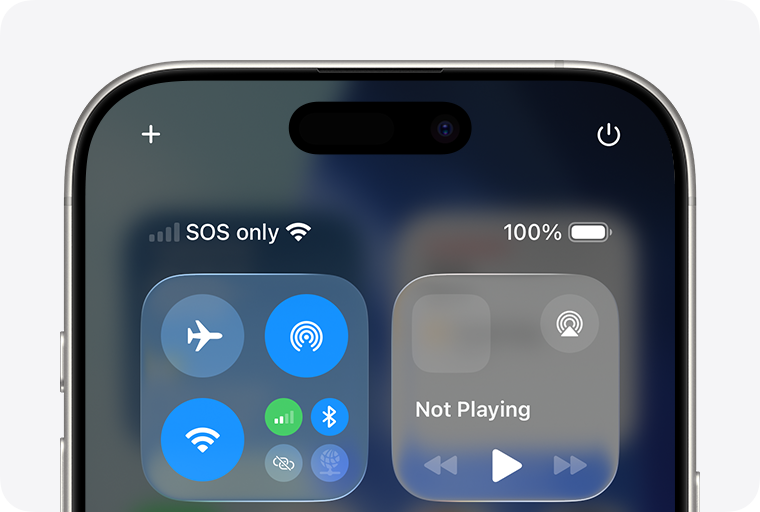
The disruption began around 11:55 AM Eastern Time following a scheduled software update and persisted throughout the business day, leaving Vermonters unable to make calls, send texts, or access mobile data. Many iPhone users saw their devices switch to “SOS” mode, indicating the presence of signals from other carriers but an inability to connect to Verizon’s network.
Where Vermont Customers Lost Service
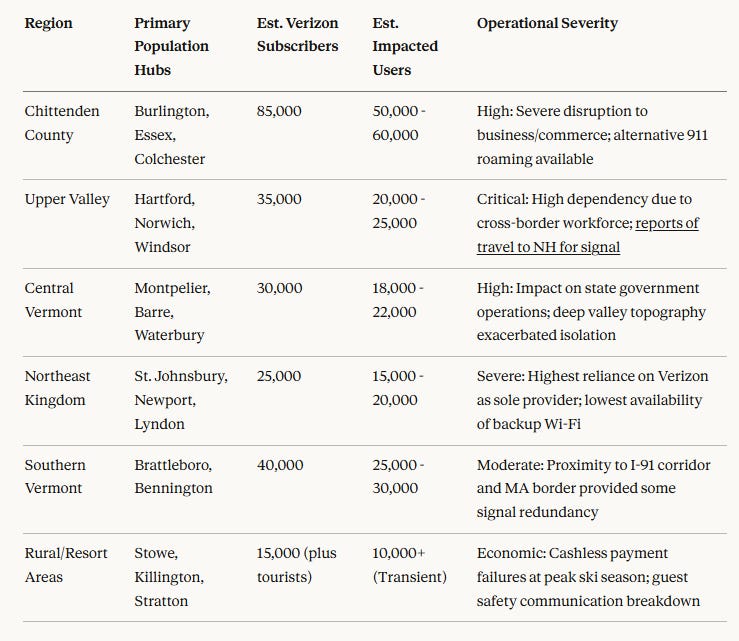
The outage affected Verizon subscribers throughout Vermont, with varying degrees of severity depending on location and the availability of alternative carriers. The following breakdown shows estimated impact across Vermont’s regions:
The Technical Cause
The failure originated in Verizon’s core network, specifically within database systems that verify customer identities and route calls. Industry analysts have described the incident as a “fat finger” error — a manual configuration mistake during routine maintenance that corrupted critical routing tables.
This was not a failure of cell towers or radio signals. Vermont’s Verizon towers remained physically operational, but when customers’ phones attempted to connect, the corrupted databases could not recognize or authenticate their own subscribers. The towers rejected connection requests, leaving devices displaying “SOS” or “No Service” messages.
Verizon officials quickly ruled out a cybersecurity incident or malicious attack, confirming the disruption resulted from an internal operational error.
Impact on Public Safety
The outage created immediate concerns about access to emergency services. While federal regulations require 911 calls to be carried by any available network, the nature of this database failure meant many phones could not complete the connection required to request that emergency roaming.
The Burlington Police Department and other Chittenden County agencies issued alerts via social media advising residents to use landlines or go directly to fire stations to report emergencies. The Northfield Police Department echoed these warnings, highlighting the need to revert to pre-digital emergency protocols.
The disruption was particularly severe in rural areas where Verizon is often the only available carrier. In these locations, the “SOS” feature that allows emergency calls through competitor networks was useless because no alternative signals existed.
Economic Disruption During Peak Season
The timing of the outage — a Wednesday in January during peak ski season — compounded its economic impact on Vermont’s winter tourism industry.
Ski resorts and small businesses increasingly reliant on cashless payment systems found their mobile point-of-sale terminals unable to process transactions. Some businesses were forced to turn away customers or implement informal “IOU” systems, while those still accepting cash continued operations with manual receipting.
Tourists navigating unfamiliar winter roads lost access to GPS navigation apps when their mobile data connections failed, creating additional friction during a critical revenue period for Vermont’s hospitality sector.
Remote Workers Left Offline
Vermont’s remote workforce, many of whom rely on Verizon’s LTE Home Internet or mobile hotspots as their primary connection in areas awaiting fiber buildouts, found themselves completely offline. For workers who had relocated to Vermont specifically for its remote-work initiatives, the outage represented a significant breach of the connectivity reliability they were promised.
Why Vermont Was Hit Particularly Hard
Vermont’s wireless market differs significantly from the national average. While Verizon holds approximately 34% of the U.S. market nationally, in Vermont the company’s market share is estimated between 45% and 50% of active subscribers.
This dominance stems from Verizon’s 2008 acquisition of Unicel, which gave the company an extensive network of low-frequency spectrum towers ideally suited for Vermont’s mountainous terrain. In many rural areas, Verizon isn’t merely the preferred carrier — it’s the only carrier with reliable coverage.
Company Response and Compensation
After service was restored later on January 14, Verizon began notifying affected customers about compensation. The company sent text messages that read:
“Valued Verizon Customer - We let you down this week. For that we are truly sorry. We would like to extend you a $20 account credit that can be easily redeemed via the link below. On average, this covers multiple days of service. This credit isn’t meant to make up for what happened. But it’s a way of acknowledging your time and showing that this matters to us. If you’re still having trouble connecting, please restart your device (power down and power back on). To redeem your credit please visit m.vzw.com/MBrf9gFO and click on the Take Action or Mobile Actions button.”
The $20 credit significantly exceeds the typical pro-rated compensation for service interruptions, which would have amounted to approximately $5 for a ten-hour outage. However, for small business owners who lost a day of sales or remote workers who burned vacation time, the compensation remains a fraction of actual economic losses.
Regulatory Response
The Federal Communications Commission immediately launched an investigation into the outage, focusing on the software update protocols that led to the database failure and the disruption of 911 access.
At the state level, the Vermont Department of Public Service, which functions as the public advocate for utility customers, is expected to demand detailed impact reports specific to Vermont rather than accepting generic nationwide statements. While the state cannot directly regulate interstate wireless operations — a federal jurisdiction — it can investigate impacts on public safety and consumer protection.
Vermont regulators are likely to scrutinize whether the failure of 911 calls violated state Enhanced 911 standards and whether Verizon adequately notified state emergency management officials during the crisis.
What Happens Next
The investigation by federal regulators will determine whether Verizon faces penalties for the outage, particularly given the scale of 911 service disruption. Previous FCC enforcement actions have resulted in fines for carriers whose preventable outages blocked emergency access.
For Vermont, the outage has accelerated conversations about telecommunications resilience and redundancy. The state’s ongoing investment in Communications Union Districts building fiber-to-the-home networks provides a separate physical infrastructure from cellular networks, offering households a backup connection if one system fails.
State officials are also reviewing emergency alert systems, recognizing that relying on SMS text messages to warn people about a cellular outage creates a circular problem. Future protocols may emphasize radio-based alerts and ensuring fire stations remain staffed as physical “safe havens” for communication during network failures.
Affected Verizon customers should watch for text messages containing redemption links for the $20 credit. Those who haven’t received notification can contact Verizon customer service directly to request the compensation.
The incident serves as a reminder that in an increasingly connected Vermont, a single technical error hundreds of miles away can silence emergency calls, halt commerce, and disconnect communities across the Green Mountains.
......"The Northfield Police Department echoed these warnings, highlighting the need to revert to pre-digital emergency protocols.".......I agree wholeheartedly that a back-up needs to be put in place. What do folks do living in the country side that are prone to power outages do, Generators!