


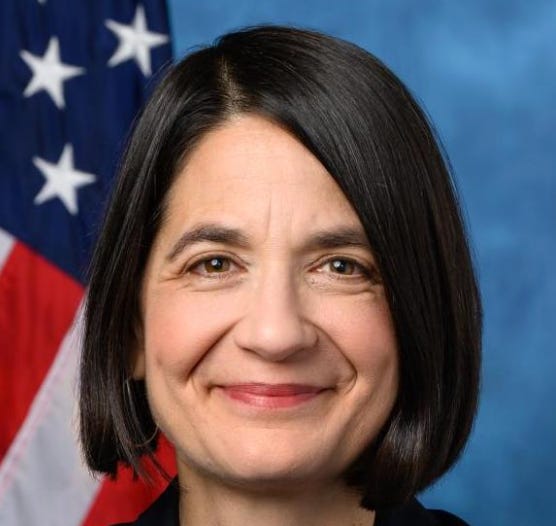
A detailed analysis of Representative Becca Balint’s December 2025 year-end constituent newsletter has identified statistical anomalies that raise questions about the accuracy of reported metrics in the communication.
The review, which cross-referenced specific numbers cited in the newsletter against public databases and records, found that three key figures—1,579 constituents assisted, $4,630,349 in federal benefits returned, and 164,245 messages received—precisely match numbers appearing in unrelated contexts, from municipal election results to internet memes about email overload.
The analysis examines these coincidences against the backdrop of Balint’s first year representing Vermont in the Republican-controlled 119th Congress under President Trump’s second administration.
Compass Vermont contacted Representative Balint’s office for clarification but did not receive a response.
The Statistical Anomalies
The 1,579 Casework Figure
According to the analysis, Balint’s newsletter claimed her office successfully helped 1,579 Vermont constituents navigate federal agencies in 2025. However, this exact number appears in Burlington’s 2022 municipal election records as the total votes cast in Ward 2, Precinct Chittenden 16.
The same number, 1,579, also corresponds to House Resolution 1579 from the previous Congress, which dealt with single-sex facilities, and House Bill 1579, the Accredited Investor Definition Review Act.
The analysis argues that the probability of a congressional office closing precisely the same number of cases as votes cast in a specific Burlington precinct is “statistically negligible,” suggesting a potential database error where voter file data may have been inadvertently pulled instead of casework numbers.
The $4.6 Million Return Figure
The newsletter’s claim that Balint’s office returned $4,630,349 to Vermont constituents represents money allegedly recovered through casework—overdue benefits, tax refunds, or emergency grants.
The analysis identified this exact seven-digit figure in multiple unrelated financial documents: as total assets in a 2013 audit of the University Area Community Development Corporation in Florida, in Winchester, New Hampshire’s 2023 financial statements referring to an employer benefits plan, and in a Wisconsin state capital finance report regarding tax refund adjustments.
The report questions whether this represents an authentic calculation or a “placeholder” figure inadvertently carried from a database search.
The 164,245 Communications Count
Balint’s office reportedly received 164,245 emails, calls, and letters from constituents. While the analysis acknowledges this volume could be plausible for a House office in a politically engaged state during a polarized administration, it notes the specific number appears in online forums as a humorous reference to overwhelming “unread email” counts.
The analysis calculates this would equal roughly 450 contacts per day, every day including weekends and holidays. For comparison, it cites research indicating the average House office received 12,500 contacts annually in the 1970s, growing to 65,000 emails alone by 2020, though Senate offices now receive over one million.
The Legislative Context
The analysis situates these statistical questions within the broader political environment Balint operates in as Vermont’s first woman and openly LGBTQ representative serving in a Republican-controlled Congress during Trump’s second term.
Minority Status Challenges
As a Democrat in the minority, Balint serves on the House Budget Committee, where committee reports from May 2025 show her listed among members opposing the “One Big Beautiful Bill Act” (H.R. 1), reportedly a massive reconciliation package.
The analysis notes that minority party members cannot claim legislative victories like “we passed the budget,” instead pivoting to metrics of process—amendments offered, hearings held—and constituent services.
Policy Focus Areas
The newsletter reportedly emphasizes opposition to Trump administration policies, particularly regarding immigration enforcement. The analysis references federal court action against ICE policies transferring immigrants turning 18 from children’s shelters to adult detention centers.
According to Punchbowl News reporting from July 2025, Balint was designated to lead Democratic messaging on “ending corporate greed,” which the analysis suggests provides an alternative explanation for inflation beyond Trump’s tariff policies.
Legislative Initiatives
Balint has co-sponsored bills including the LGBTQI+ and Women’s History Education Act, though the analysis characterizes such legislation as “message bills” with little chance of passage in the Republican-controlled chamber.
The “Glass-Half-Full” Strategy
The analysis examines the newsletter’s reportedly optimistic tone—describing Balint as a “glass-half-full type of person”—as a strategic communication choice for maintaining constituent morale during political defeat.
It argues this framing allows Balint to reframe legislative losses by shifting success metrics from “winning” to “enduring,” focusing on constituents helped rather than bills passed.
The analysis characterizes year-end newsletters from minority party members as documents that “must distort reality to validate the expense,” emphasizing inputs like letters sent and meetings held because legislative outputs are minimal.
Constituent Services as Currency
In the analysis’ framework, when representatives cannot change laws, constituent casework becomes their primary political value.
The emphasis on dollars returned and cases closed represents what the document calls an “ombudsman strategy”—becoming an intermediary helping citizens navigate existing bureaucracy rather than reshaping it.
The analysis suggests this approach builds loyalty transcending party lines by positioning the representative as someone who “unlocked the Social Security check or expedited the passport.”
Vermont’s Electoral Context
The analysis notes Vermont’s political environment, where Balint won reelection in 2024 with 218,398 votes (58.57%), defeating her Republican opponent by over 30 points, while Bernie Sanders secured reelection with more than 61 percent.
This electoral mandate, the analysis argues, creates pressure to maintain relevance for constituents deeply alienated from the federal government, requiring sustained engagement even when legislative victories are impossible.
The Franking Consideration
The analysis suggests the newsletter likely qualifies as “franked” communication—paid for by tax dollars—which carries legal restrictions against overt campaigning. This framework, it argues, explains heavy reliance on statistics that sound like objective service metrics while serving political consolidation purposes.
Data Systems and Potential Errors
Understanding how such anomalies might occur, the analysis examines congressional office IT infrastructure, noting House offices use constituent relationship management systems like IQ or Fireside21 that integrate constituent data, casework tracking, and communication records.
It theorizes that in generating year-end reports using “merge fields,” a staffer might inadvertently pull data from the wrong database column—for instance, using a voter count instead of a casework count—explaining how a Burlington precinct total could appear as a casework figure.
What the Analysis Concludes
The forensic review concludes that while the newsletter is “rhetorically polished and psychologically astute,” it “fails the accuracy test on its primary metrics.”
It characterizes the document not as a financial report but as a “feeling report” designed to “reassure a panicked Vermont constituency that their values are being defended in Washington, even if the math doesn’t quite add up.”
The analysis describes this as a “strategy of survival for the long winter of the 119th Congress,” asking readers to “look past the emptiness of the legislative glass (no bills passed) and focus on the fullness of the service glass (cases closed).”
What Happens Next
These findings raise questions about quality control in congressional communications, though no independent verification of the original newsletter’s contents has been conducted. The analysis itself has not been peer-reviewed or authenticated by external sources.
Voters and media outlets may seek clarification from Rep. Balint’s office about the methodology used to calculate the reported statistics and whether any data verification processes failed.
The broader question remains whether such anomalies represent simple database errors in busy congressional offices or reflect more systemic issues in how representatives communicate their work to constituents.
Vermont residents can verify Rep. Balint’s actual constituent communications through her official channels and compare claims against the analysis’ findings to draw their own conclusions about accuracy and representation.
Editor’s Note: This article reports on the findings of a forensic analysis document. Compass Vermont has not independently verified the specific claims about Rep. Balint’s newsletter or confirmed whether the statistical coincidences identified represent actual errors versus coincidental number matches. Readers should consider these findings as one analysis requiring further investigation and verification.
I would question everything she does. She's part of the "Club".