


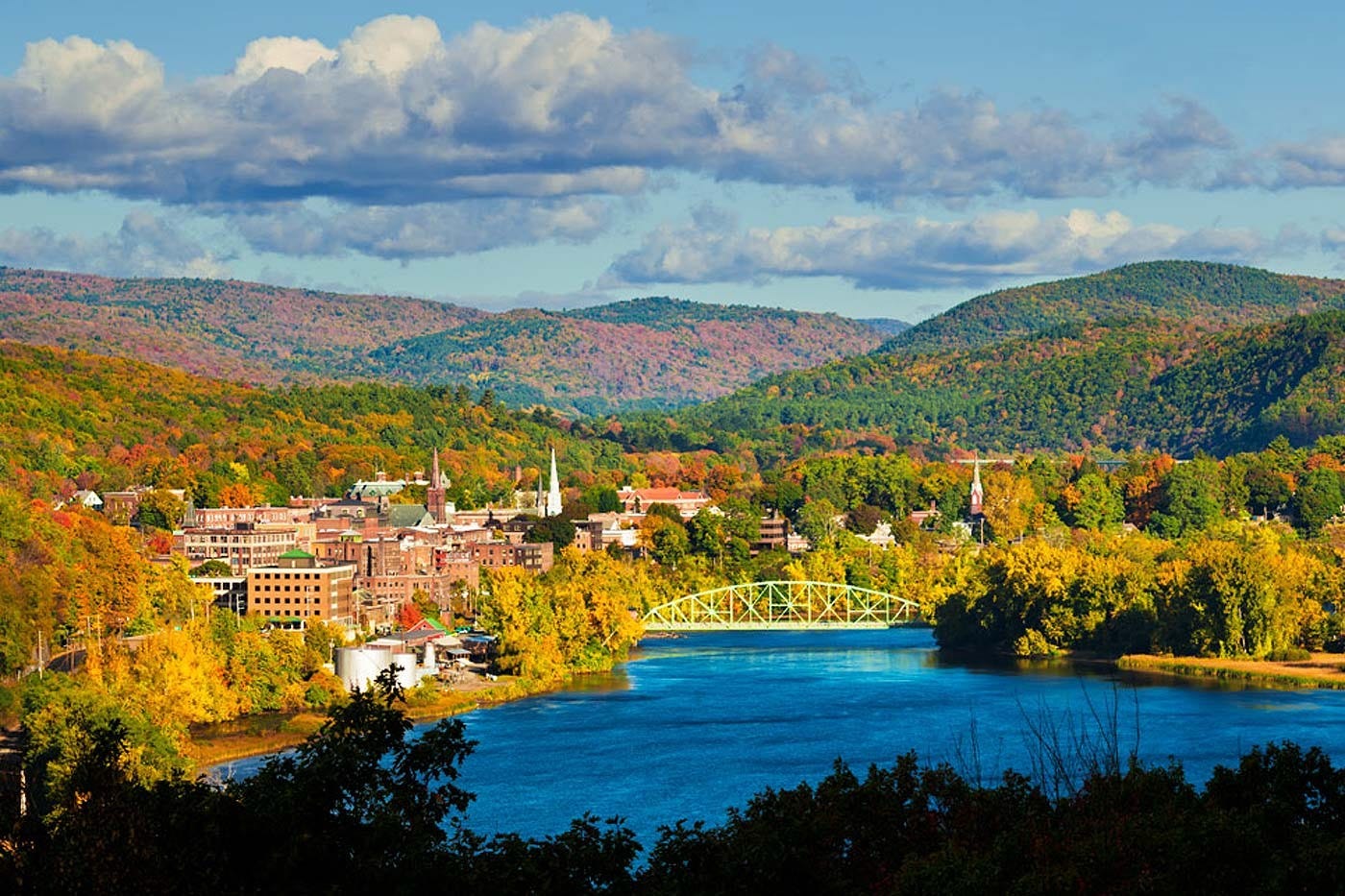
In September 2022, plastic from a Brattleboro paper mill began floating down the Connecticut River. It happened again three weeks later. In December, wastewater was being pumped through a hose over a lagoon berm and into the woods toward the riverbank.
The plant’s wastewater treatment system had been operating without a licensed operator for months. And in the lagoons, sludge was accumulating — sludge that testing would later show contained mercury, PCBs, and cyanide.
On May 7, Vermont Attorney General Charity Clark announced a $145,000 settlement with Long Falls Paperboard LLC to resolve a lawsuit filed against the company in October 2024. The Attorney General’s press release described the settlement as “a good outcome that will result in site cleanup.” The court order and the complaint that preceded it tell a more complicated story.
Ten Counts, Five Years, $145,000
The complaint filed by the State in Windham Superior Court documents ten separate counts of environmental violations at the Long Falls Paperboard plant at 161 Wellington Road in Brattleboro — a 39-acre parcel that runs along the Connecticut River. The violations span the entirety of Long Falls Paperboard’s ownership of the plant, beginning in February 2019, the company’s first month of operation.
According to the State’s complaint, the violations include: effluent limits for biochemical oxygen demand exceeded on thirty separate days between February 2019 and May 2022; discharge monitoring reports submitted late to the Agency of Natural Resources twenty-four times; the plant’s clarifier — the primary wastewater treatment component — broke in August 2021 and operated impaired for four months without ANR notification as required by the facility’s permit; plastic discharged into the Connecticut River in September and October 2022; wastewater discharged through a hose into woods adjacent to the river on multiple occasions in December 2022, after ANR had informed the company the practice was a violation; and over 3,000 cubic yards of sludge stockpiled on site in piles up to ten feet high.
The facility also operated without a licensed wastewater treatment operator for twelve consecutive months — from October 15, 2022, to October 12, 2023.
Under 10 V.S.A. § 8221, the civil enforcement statute used by the Attorney General in this case, courts may assess civil penalties of up to $85,000 per violation or up to $42,500 for each day a violation continues. The twelve-month unlicensed operation period alone represents 365 days of theoretical statutory exposure under the per-day penalty provision. The State resolved the case through a $145,000 settlement, payable over six months.
Court filings in a 2021 federal lawsuit brought by an unpaid contractor stated that Long Falls Paperboard had lost nearly $14 million since acquiring the plant, had defaulted on a $2 million loan from the Vermont Economic Development Authority, and had failed to repay a $500,000 bridge loan from the Windham County Economic Development Program — all while environmental violations were accumulating.
The Attorney General’s office declined to answer Compass Vermont’s questions about how the penalty figure was calculated. In correspondence with Compass Vermont, the office cited concerns about the publication’s accuracy. When Compass Vermont asked the office to identify specific errors, the office cited one correction that had been made the same day it was identified. Compass Vermont received no further response before publication.
Mercury, PCBs, and Cyanide
The settlement order requires Long Falls Paperboard to remove all stockpiled sludge from the site and to conduct soil sampling, while stating that certain broader contamination issues — including potential brownfields — are outside the scope of the order.
The complaint provides context for why broader contamination questions may matter. On August 30, 2023, sludge from the facility’s lagoons was sampled at the company’s direction. Test results showed mercury, PCBs, and cyanide at levels the complaint described as “unacceptable for use of the residuals in compost.” The settlement was announced roughly seventeen months after the August 30, 2023 sludge sampling described in the complaint.
The contamination question is not new. The site has carried environmental concerns since before Long Falls Paperboard’s ownership — the EPA grant awarded to BDCC in June 2019 was specifically for a site described as having a long history of industrial use. In June 2019, BDCC received a $500,000 EPA Brownfields grant for Phase II environmental assessment and cleanup work at the site. The settlement order now requires soil sampling specifically beneath the sludge stockpiles that accumulated during Long Falls Paperboard’s operation.
If that sampling reveals contamination beyond the sludge stockpile, responsibility for any further investigation or remediation could become a separate legal question involving the landowner, operator, prior owners, or other potentially responsible parties. Any broader contamination finding could lead to separate regulatory or legal proceedings not resolved by the current settlement order.
The Attorney General’s office declined to respond to questions about what prompted the broader contamination carve-out or what ANR’s soil testing expectations are.
Who Controls Long Falls Paperboard
A review of corporate records across multiple state registries, supplemented by Vermont municipal property records reviewed by Compass Vermont in May 2026, reveals the following ownership structure.
Long Falls Paperboard LLC is a Washington State foreign limited liability company registered to do business in Vermont, with a principal address listed as 618 Powers Road in Starbuck, Washington — a town with a population of about 130, according to U.S. Census data. Its mailing address on file with the Vermont Secretary of State is a registered agent service in Newark, Delaware.
The company is controlled by two members. The first is Northrich US Holding Company — a Delaware domestic corporation formed February 5, 2019, two months after Long Falls Paperboard acquired the plant operations — which serves as both member and manager. Northrich US Holding Company is connected through shared ownership and address to Les Cartons Northrich Inc., a paperboard company based in Granby, Quebec. The second member is Long Falls Group LLC, a Washington State company whose governors are Richard Normandin personally and Cammenga Investments LLC, which prior reporting has linked to Mike Cammenga, identified in that reporting as a co-owner and former plant manager.
The land and buildings at 161 Wellington Road tell a separate but connected story. When Long Falls Paperboard acquired the plant operations in December 2018, BDCC purchased the land and buildings for $1 million as part of a public-private structure described at the time as helping enable the sale. BDCC held the property for three years — receiving a $500,000 EPA Brownfields grant in June 2019 to conduct environmental assessment and cleanup work at the site.
On January 14, 2022, BDCC sold the property to 161 Wellington Road Real Estate Holding, Inc. — a Delaware corporation registered in Vermont twelve days later, with Richard Normandin listed as its sole director. The corporation’s address on the Brattleboro parcel record is 222 Rue St-Urbain, Granby, Quebec — the same address associated with Northrich’s headquarters.
The timing of that transaction is notable. In a single month — January 2022 — three things happened simultaneously at the Brattleboro plant: BDCC transferred the land and buildings to Normandin’s newly created holding company on January 14; the facility’s licensed wastewater operator resigned on January 3; and ANR conducted a hazardous waste inspection on January 27 that, according to the State’s complaint, found 52 containers of improperly stored waste totaling approximately 21,000 pounds — unlabeled, frozen, leaking, and stored without fire suppression equipment.
Corporate and property records reviewed by Compass Vermont show Normandin listed in positions connected to the land, buildings, and equipment through separate entities in multiple jurisdictions. Those records repeatedly list Normandin and the Granby, Quebec address associated with Northrich.
Company materials reviewed by Compass Vermont describe Normandin’s Long Falls tenure in terms of sustainability and innovation. Northrich marketing materials describe its products as made from 100% recycled fiber and emphasize environmental stewardship principles.
In response to questions from Compass Vermont, Normandin attributed the violations to the plant’s closure. “When the mill was forced to shut down in the wake of COVID-19 and amid broader economic challenges affecting the paperboard industry, certain byproducts accumulated in the facility’s treatment lagoons and were not immediately removed,” he wrote.
The State’s complaint, however, alleges violations beginning in February 2019 — more than a year before the pandemic reached Vermont. Asked specifically to account for violations that predated COVID-19, Normandin responded that the cited issues “originated under prior ownership and management of the facility” and represented “legacy conditions that were not created under Long Falls Paperboard’s stewardship.”
The complaint states that Long Falls Paperboard assumed ownership of the facility on January 1, 2019, and that the first documented violations occurred in February 2019 — the company’s second month of operation. As part of the settlement, Long Falls Paperboard admitted the factual allegations covering that entire period, as set forth in the settlement order.
What the Settlement Requires
Under the court-approved settlement order, Long Falls Paperboard must complete sludge removal to native soil within 100 days, submit a soil sampling plan to ANR within 90 days, and report test results to ANR within seven days of receipt. The $145,000 penalty is paid in six installments over 150 days.
The order binds Long Falls Paperboard and all successors and assigns. Any change in ownership does not alter the company’s obligations under the order.
The violations admitted in the complaint are deemed established as prior violations in any future state proceeding — including permit reviews and future penalty calculations.
The court and ANR reserve continuing jurisdiction to ensure compliance.
Boy, if it looks like rotting Fish,smells like rotting Fish, it probably is rotting Fish..... And this.........."The Attorney General’s office declined to answer Compass Vermont’s questions about how the penalty figure was calculated."......Why am I not surprised...