


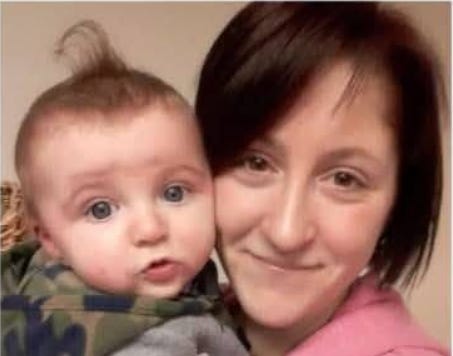
On May 8, 2025, a 24-year-old woman named Hailey Colyer was stabbed to death inside a Colchester residence. The man charged with killing her, Elijah Compagna, 27, had a documented violent history, was on active probation, and was living in a shared living arrangement set up by the Howard Center with a caregiver in the residence. The caregiver was home at the time of the murder. He told police that Compagna had “a violent past.”
According to Kelly Carroll, founder of the grassroots advocacy group Voices for Vermont Victims, Compagna had been found not competent and deemed dangerous before being placed in community-based housing. Compass Vermont has not been able to independently verify that specific legal finding from published court records. What is confirmed is that the state knew enough about Compagna’s risk level to place him in a supervised living arrangement — and that a woman is dead in a setting that was not designed or staffed to prevent it.
The killing happened while the Vermont legislature was wrapping up the first half of its 2025–2026 session. A bill to create a secure treatment facility for people charged with serious violent crimes who are found incompetent to stand trial was already under discussion. It had been under discussion, in one form or another, since 2021.
It is now April 2026. The bill, S.193, passed the Vermont Senate on April 1 by a vote of 29 to 1. It arrived in the House with the support of the governor, the Agency of Human Services, the Department of Corrections, and the Department of Mental Health. Three House committees are reviewing it. None has voted.
The session is scheduled to adjourn May 8 — exactly one year after Hailey Colyer was killed.
What’s at stake if this bill dies
If you live in Vermont and someone in your community is charged with murder, aggravated assault, or kidnapping and is found incompetent to stand trial, the state has no dedicated secure facility to hold them during treatment and no formal competency restoration program. According to Karen Barber, General Counsel of the Department of Mental Health, Vermont may be the only state in the country without such a facility.
What happens instead, according to testimony from state officials and bill supporters, depends on which agency takes custody. The Department of Mental Health can hospitalize someone — but only if they meet the clinical threshold for acute psychiatric care. Once they stabilize, DMH is required under current standards to release them to a less restrictive setting. The Department of Corrections can hold them — but has no treatment program designed for competency restoration. The courts can order evaluations — but if a defendant refuses to participate, as has happened repeatedly in the Pronto case, the case can stall for years.
Carroll and supporters of S.193 say the current system produces a cycle: arrest, evaluate, hospitalize, stabilize, release, repeat. Or worse: arrest, evaluate, find incompetent, release into community-based housing without adequate supervision, and wait for the next incident.
Kelly Carroll knows this cycle intimately. Her daughter, Emily Hamann, was 26 when she was slashed to death in downtown Bennington in January 2021 by Darren Pronto, a man who had been found incompetent to stand trial in a prior violent case, hospitalized, stabilized, and released into the custody of his mother three months before the killing. Pronto had carved the words “Murder Time” into his mother’s dining room wall days before he killed Hamann. He was charged with first-degree murder and has never stood trial. He has refused competency evaluations repeatedly. His case has been pending for more than five years.
Carroll has been asking the legislature to close this gap since the day her daughter died. The legislature has been saying it will. Five years later, here is what has actually happened.
Five years, four attempts, same result
2021: S.3 (Act 57) created a forensic facility working group to study the issue and make recommendations. Carroll participated. The group completed its work, but Vermont still had not created a secure facility by the time later bills were introduced.
2023: S.89, an act to establish a forensic facility, passed the Senate. A companion bill, S.91, addressing competency to stand trial, advanced through much of the process but ran out of time before receiving a final House vote.
2024: S.192 included a forensic facility component — until the final hours of the session, when the House Human Services Committee stripped it. What remained allowed involuntary medication at the Essex facility but left Vermont without a secure treatment facility. During that process, Carroll requested to testify and contacted the committee chair, vice chair, and a local representative. She received no response. No victims testified. According to Carroll, Representative Theresa Wood stated during testimony that victim input was irrelevant because “all you bring is emotion.” Compass Vermont has not been able to verify this statement from the hearing record.
2026: S.193 spent two months in three Senate committees. Twenty-seven witnesses testified, according to the bill’s legislative record. The Senate passed it 29–1. It arrived in the House — where three committees are now holding hearings and requesting additional information, including on subjects previously explored in Senate hearings. No committee has voted with 16 days left before adjournment.
Carroll warned the House committees about this pattern in her very first letter after the Senate vote. “There is also a strong sense of déjà vu with this bill,” she wrote on April 1. “A similar forensic facility proposal passed in 2023, only to have the facility component removed at the last moment in 2024 by the House Human Services Committee.”
On April 20, she wrote to Speaker Krowinski asking that S.193 remain in House Judiciary rather than be transferred to another committee. The significance of that request is visible only if you know the 2024 history: the facility was stripped by a different committee than the one that did the primary work on the bill. Carroll has warned that she fears a repeat of that maneuver.
What the House is hearing — and what the families are hearing
On April 9, Jack McCullough, director of the Mental Health Law Project at Vermont Legal Aid, testified before House Judiciary. His assessment of the current system was direct: “We’re not seeing any significant number of people who are found incompetent to stand trial or not guilty by reason of insanity, who go through our present process, and then go on out and commit another serious crime.” He questioned whether a new facility would yield better outcomes.
Carroll responded the same day in a letter to the committee. She listed the cases: Emily Hamann. Karina Rheaume, a mother of four shot and killed by her father in Newbury. Elizabeth Teague, who murdered her boss at a Bennington battery plant in 1991 and has been in DMH custody for more than three decades, refusing medication the entire time. Elijah Compagna. Jordan Lawyer. Brian Crossman. Matthew Gomes. Zaaian Mavish-Jammeh.
“These are not isolated incidents — they are patterns of preventable violence and prolonged system failure,” Carroll wrote.
McCullough also suggested during testimony that victims do not fully understand the liberty interests at stake in these cases. Carroll’s response was direct: “In murder cases, victims and survivors know very well what it means to have liberty taken away. We live every day with the permanent loss imposed by these crimes. We may not all be lawyers, but we understand consequences.” Representative Angela Arsenault, D-Chittenden-2, pushed back on McCullough’s framing during the hearing. Representative Zachary Harvey pressed for specific data to support the general claims made by Legal Aid, the Defender General, and Disability Rights Vermont. Carroll thanked both in her letter.
McCullough has decades of experience in Vermont mental health law. His position represents one side of a genuine policy tension. But his testimony that the current system is not producing a significant number of repeat serious crimes rests on how you evaluate the data. For the families on Carroll’s list — families whose daughters and mothers and fathers were killed by people the system had already identified as dangerous — the number is significant enough.
Carroll also noted that McCullough’s testimony referenced murder cases dismissed by former Chittenden County State’s Attorney Sarah George in 2019 on insanity grounds involving Louis Fortier, Aita Gurung, and Veronica Lewis. Then-Attorney General T.J. Donovan refiled all three. Gurung was ultimately convicted and sentenced in 2023.
Carroll argues that Vermont has spent five years debating where to put this facility — DOC, DMH, a standalone agency — and every year the state delays, the gap remains and Vermonters remain at risk.
What the gap looks like right now
While the House schedules its next hearing, here is where the cases Carroll has been tracking stand:
Darren Pronto, charged with the first-degree murder of Emily Hamann in January 2021, has never stood trial. He has appeared via video link for competency proceedings but has refused evaluations repeatedly. At one point, according to Carroll, his attorney said he was “not a morning person,” so the court adjusted the evaluation time. He still refused. Carroll’s family returns to court every few months and is retraumatized each time. Pronto appears to remain in some form of state custody, but his precise status is unclear from available public records. During Senate testimony, Deputy State’s Attorney Jared Bianchi presented a video of Pronto stating in his own words that he could murder anyone he wanted and that the state could not stop him.
James Perry Jr., who shot and killed his daughter Karina Rheaume while she was bringing him cookies, was found not guilty by reason of insanity in April 2025. He has no criminal record. Last August, a judge placed him in a residential care program rather than a locked facility — because, as Carroll and the Rheaume family have pointed out, Vermont does not have one. According to testimony from the Orange County State’s Attorney’s office, the state had considered placement options including a hotel, a nursing home, and a group home.
Elizabeth Teague, who killed her boss in Bennington in 1991, has been in DMH custody for more than three decades. She has refused medication the entire time. Her case illustrates how long-term custody can continue without the kind of secure treatment model now proposed in S.193.
According to testimony from Commissioner of Corrections Jon Murad and the governor’s general counsel Jaye Pershing Johnson, six people currently sit in Department of Corrections custody who cannot stand trial and have no formal treatment pathway.
And on April 15, Emilie Perry — Karina Rheaume’s sister — testified before House Judiciary. Carroll described her testimony as “powerful.” Perry’s family has been living with the consequences of the gap since May 2021. Her father killed her sister. As of the most recent court reporting, he is in an unlocked residential program.
Why this keeps happening
The roots of Vermont’s competency gap trace back to 2011, when Hurricane Irene destroyed the Waterbury State Hospital — the centralized, secure psychiatric facility that had previously handled this population. In the fifteen years since, as Carroll wrote to House committees, “Vermont has been operating without a fully functional mental health infrastructure,” relying instead on limited decentralized beds, voluntary outpatient care, and DOC holding patterns.
The gap persists, Carroll and bill supporters argue, because responsibility is split among agencies, committees, and sessions. DMH handles hospitalization. DOC handles custody. The courts handle competency findings. No single institution owns the problem, and no single institution is accountable for solving it. Adding to the constraint is the U.S. Supreme Court’s 1972 ruling in Jackson v. Indiana, which limits the state’s ability to hold an incompetent defendant indefinitely without a substantial probability of restoration — a constitutional requirement that S.193 attempts to satisfy by creating a formal restoration pathway with periodic judicial review.
Every time a bill crosses from the Senate to the House, the process resets. New committees hear the same witnesses offering similar concerns. McCullough testified in Senate Judiciary in January and February. He testified before House Judiciary in April. The House committees are now requesting additional information on subjects the Senate explored over two months and 20 hearings, according to the bill’s legislative record.
Carroll has watched this cycle four times. She has written letters to every committee that has touched this issue. She has testified in person. She has filed ethics complaints. She has tracked committee votes and rebutted testimony point by point. She has urged committees to independently verify claims with DMH — repeating “verify with DMH” four times in a single letter — because she has seen inaccurate testimony go unchallenged in prior sessions.
She wrote to the House committees on April 1: “We cannot continue to cycle through the same outcomes and expect different results.”
On April 21, Compass Vermont asked Carroll whether she believed the legislature was trying to delay the bill again. Her answer was not available at the time of publication.
S.193 still needs a committee vote, a House floor vote, reconciliation with the Senate version, and the governor’s signature. There are 16 days left. The session adjourns May 8.
Carroll has been asking for urgency since January 18, 2021 — the morning her daughter was murdered on the Riverwalk in downtown Bennington. She has been told, in one form or another, that the legislature is working on it.
She is still waiting.
Compass Vermont is free, independent, and has no ads, no sponsors, and no corporate owner. If you value reporting that gives you the full picture and lets you draw your own conclusions, please consider subscribing or upgrading to a paid subscription. Every subscription — free or paid — helps us keep doing this work.
.........."The killing happened while the Vermont legislature was wrapping up the first half of its 2025–2026 session. A bill to create a secure treatment facility for people charged with serious violent crimes who are found incompetent to stand trial was already under discussion. It had been under discussion, in one form or another, since 2021.
It is now April 2026. ".........Just wow!......
This is a terrible problem. The larger problem is that we increasingly have nowhere to place individuals who are not violent, but do suffer from mental illness. We have closed hospital beds with no replacement for people who lack any shelter at all, and often lack sufficient food. There are likely few people who could be considered violent to the point of murder or attempted murder, but there are certainly a few not named in this article, that I am not at liberty to name. Even if they are housed in a hospital, they put staff who are under strict mandates concerning seclusion and restraint at risk.