


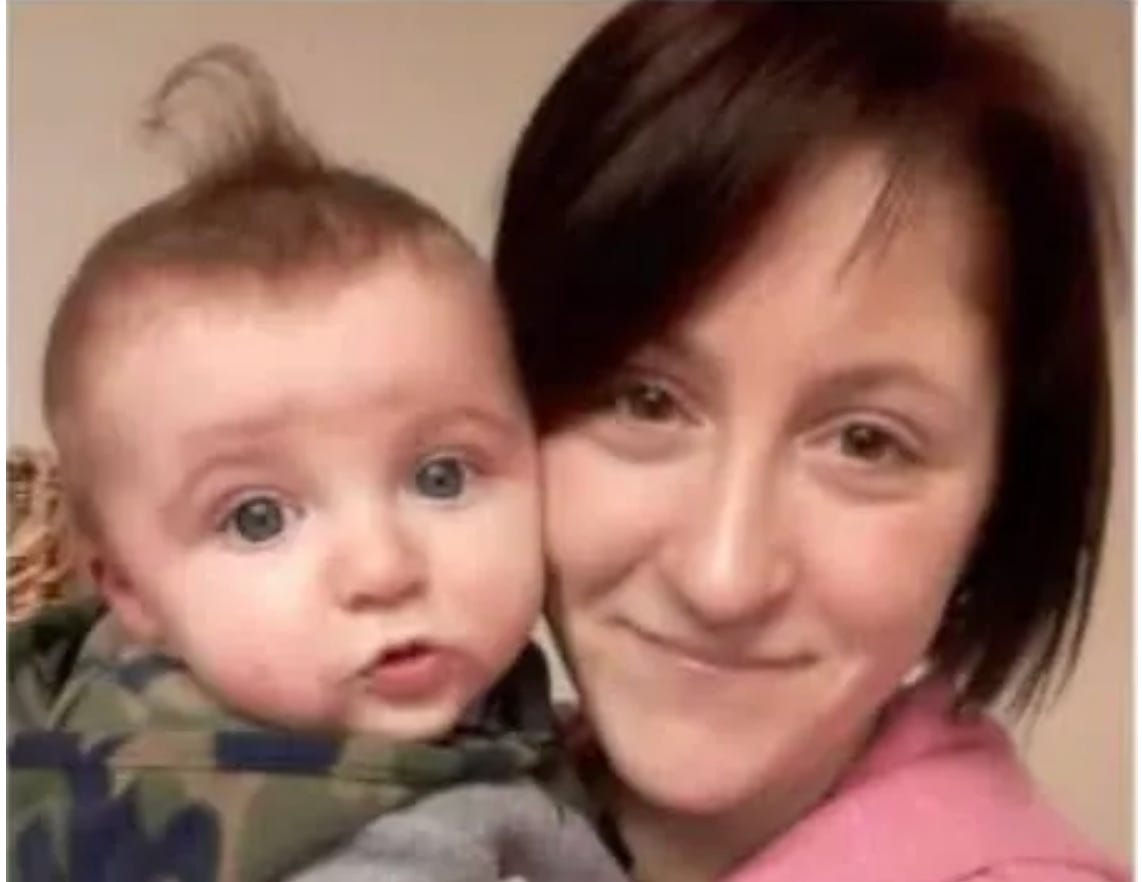
The bill creates an interim program starting next year and a permanent locked facility by 2029. It closes the loophole that let defendants refuse treatment forever. And for the first time, victims will be heard. It now goes back to the Senate.
The Vermont House of Representatives passed S.193 by a vote of 115 to 9 — the bill that would, for the first time in Vermont’s history, create a statutory framework for a secure treatment facility for people charged with the most serious violent crimes who are found mentally unfit for trial.
The bill is sponsored by a bipartisan group of ten representatives: Burditt of West Rutland, Arsenault of Williston, Christie of Hartford, Dolan of Essex Junction, Goodnow of Brattleboro, Goslant of Northfield, Harvey of Castleton, LaLonde of South Burlington, Malay of Pittsford, and Oliver of Sheldon. Rep. Arsenault is the same lawmaker Kelly Carroll publicly thanked for pushing back on Jack McCullough’s testimony that victims don’t fully understand the issues at stake.
The bill now returns to the Senate, which passed an earlier version 29-1 on April 1, for concurrence with the House amendments. If the Senate concurs, it goes to Governor Scott, who has publicly supported the creation of a forensic facility.
If it makes it, here is what changes — in plain language.
Something starts next year
By December 31, 2026, the Secretary of Human Services must adopt emergency rules to establish an interim forensic and competency restoration program. That program takes effect July 1, 2027 and will operate inside existing facilities while the permanent facility is being built.
This is what Governor Scott asked for at his May 6 press conference — something that starts without waiting years for a new building. It’s what Kelly Carroll has been asking for since her daughter Emily Hamann was murdered in Bennington in 2021. And it’s what Kim McManus of the Department of State’s Attorneys and Sheriffs described when she told the governor’s press conference that all 14 state’s attorneys and all 14 sheriffs can name individuals in their communities who pose a risk and are unsupervised — because there has been nowhere for them to go.
Critically, the interim program does not require another legislative vote to launch. The permanent facility does. That distinction matters — it means the interim program cannot be killed by a future committee the way prior versions were stripped in 2024. But the bill includes a caveat: the program is “contingent on the availability of sufficient resources including appropriate staffing levels.” If the legislature doesn’t fund it, the statute becomes an empty framework.
The emergency rules expire July 1, 2029 — the same date the permanent facility must be operational. That sunset forces the permanent facility to happen or the interim authority disappears entirely.
The permanent facility is mandated — not studied
The bill does not create another working group. It does not authorize another feasibility study and walk away. It uses the word “shall”: the Secretary of Human Services shall establish and operate a locked secure forensic facility by July 1, 2029.
The facility will provide competency restoration, evaluation, stabilization, treatment, and care for people who have been found not competent to stand trial or not guilty by reason of insanity for serious criminal offenses — specifically, offenses punishable by a life sentence, including murder, aggravated sexual assault, and kidnapping.
The bill defines what the facility must include: a registered nurse or physician available 24 hours a day, seven days a week. An initial treatment plan within 72 hours of admission. Psychiatric care, medication management, education about court procedures, habilitation, and trauma-informed care. Grievance and appeals procedures. A process for reporting deaths or serious injuries.
This is not a concept paper. It is a statute.
DOC is out of the permanent facility. For now, it provides the bridge.
The five-year argument about whether the facility should be run by Corrections or a health agency has been settled — with a compromise. For the permanent facility, which must be operational by July 1, 2029, the bill states: “The Department of Corrections shall not operate or staff the forensic facility.” The one exception: DOC employees may provide security at the admitting area and outside perimeter if the facility is co-located on a correctional campus.
For the interim program — the bridge that operates from July 2027 to July 2029 — DOC plays a larger role, supervising released individuals in collaboration with AHS departments. That interim authority sunsets on the same day the permanent facility is required to be operational. The legislature will have three years to evaluate whether the interim model is working and adjust.
All clinical, forensic, and competency restoration services — both interim and permanent — will be overseen by the Agency of Human Services Medical Director.
The bill also explicitly excludes DOC’s current healthcare contractor from providing interim restoration services. The statutory language: the entity providing services “shall not be under contract with the Department of Corrections.” That means Wellpath — which declared bankruptcy in 2024 with $644 million in debt and more than 1,500 lawsuits nationally — is barred from the program by law, not just by committee discussion.
As Compass Vermont reported, Bridgewater State Hospital in Massachusetts is widely cited as the only major corrections-run forensic facility in the country, and Massachusetts is actively seeking to move it to its Department of Mental Health. Vermont’s bill ensures the state will not follow that model for the permanent facility.
The refusal loophole is closed
For five years, Kelly Carroll has described a system that allows defendants to refuse treatment indefinitely and run out the clock. Her daughter’s killer, Darren Pronto, has refused competency evaluations repeatedly since his arrest in 2021. He has never stood trial. At one point, according to Carroll, his attorney said he was “not a morning person,” so the court adjusted the evaluation time. He still refused.
The bill closes that door. Section 4815a(e) states: “The person’s refusal to receive competency restoration services shall not be grounds for release or dismissal from the forensic facility.”
That single sentence may be the most consequential line in the entire bill. A defendant can still refuse treatment — but refusing no longer means the case stalls forever. The six-month reevaluation clock runs regardless. The court retains authority. The system moves forward whether the defendant participates or not.
Victims will be heard — in every proceeding
Amy Farr, director of Victim Services for the Vermont State Police, said at the governor’s press conference that this bill would give victims notice and voice in proceedings that have historically been closed to them. The bill text delivers on that.
The State’s Attorney must notify victims before every hearing. The court must ask whether the victim is present and offer them the opportunity to be heard. The court may consider the victim’s views on the offense and their preferences for the defendant’s placement and care. If the victim is not present, the court must ask whether they have expressed views — and may consider those views.
Carroll testified in her April 9 letter to House Judiciary that during a prior session, victim impact statements were removed from the bill and “only restored after significant public concern and advocacy.” She wrote that even after restoration, the final language “made it clear that written victim impact statements may not be read by the judge and would never be included in the official court record.”
This bill changes that. Victims are embedded in every stage of the process — admission, review, release, and readmission. That is a direct result of Carroll’s five years of advocacy.
Constitutional safeguards are built in
The bill satisfies the requirements of Jackson v. Indiana, the 1972 U.S. Supreme Court ruling that prohibits indefinite detention of incompetent defendants without a substantial probability of restoration. The framework includes:
Competency reevaluations every six months — or sooner if the AHS Medical Director determines the person is likely competent or unlikely to be restored. A 60-day dangerousness hearing if someone is found not restorable. Continued commitment only if the State’s Attorney proves dangerousness by clear and convincing evidence. Court-ordered release if the state cannot meet that burden. Twelve-month reviews for anyone under continued commitment. And involuntary medication only with court approval, under strict standards requiring proof that medication is medically appropriate, serves important governmental interests, and that less intrusive alternatives are unlikely to work.
The bill also provides for court-ordered return to the facility if someone is released and becomes noncompliant with conditions — with a hearing required and the state bearing the burden of proof.
What happens next
The House passed S.193 on Monday, 115-9. Nine representatives voted no. One hundred and fifteen voted yes. The bill now returns to the Senate for concurrence with the House amendments. Because the House version is substantially different from the 29-1 bill the Senate passed on April 1, the Senate must vote again. If the Senate concurs, the bill goes to the governor, who has publicly supported the creation of a forensic facility. If the Senate doesn’t concur, the bill goes to a Committee of Conference — though with 115 House votes and 29 Senate votes behind it, the political will appears to be there.
One caveat worth watching: the bill states that the interim program is “contingent on the availability of sufficient resources including appropriate staffing levels.” That language means the program’s existence depends on funding — and if the legislature doesn’t appropriate the money, the statutory framework becomes an empty promise. The same legislature that debated this issue for five years without spending a dollar on a facility will need to fund one for the bill to have any real-world effect. The bill prohibits spending FY2027 money on construction, but it does allow planning and feasibility work to begin immediately.
During House debate, Rep. James Gregoire, R-Fairfield, captured the central tension: “Do not let perfection get in the way of the step that needs to be taken.” Rep. Troy Headrick, I-Burlington, disagreed: “There’s nothing therapeutic, there’s nothing clinical. It’s a jail cell.”
The House decided. 115-9. Five years of debate ended with a vote that wasn’t close.
Carroll wrote to House committees on May 13: “Vermont needs a system focused on treatment, supervision, accountability, and public safety. Continuing to delay action does not make the gap disappear.”
Five years after her daughter was killed. Four bills. Dozens of committee hearings. Twenty-seven Senate witnesses. Letters to every committee. Testimony in every session. A working group that collapsed. A facility that was stripped. A bill that was rewritten. And a mother who never stopped writing.
Today may be the day Vermont finally answers.
This is the latest in a series of Compass Vermont reports on Vermont’s competency gap. Read the full series for background on the bill’s legislative history, the families affected, and how other states have addressed this issue.
Compass Vermont is free, independent, and has no ads, no sponsors, and no corporate owner. If you value reporting that gives you the full picture and lets you draw your own conclusions, please consider subscribing or upgrading to a paid subscription.
When the legislature closed Vermont State Hospital, after threatening to force decades, it destroyed the only facility that provided real care to people who were treatment resistant , and that had the ability to keep individuals in the community, and the people who needed ongoing, very long term care safe. Many of the latter fit into the forensic, high risk category. The current facility operating in Berlin is very small, and the staff have little ability to protect these individuals, themselves, and other patients from harm. I hope that whatever comes of this bill helps the situation, but historically, the people who knew best, i.e., the nursing staff, the doctors, the psychologists, the occupational therapists, etc., were ignored. I do not believe that has changed.