


An immigration judge in Massachusetts had already begun hearing Olivier Viellard’s case on Friday, Nov. 20, when his lawyers learned that the Vermont hospice nurse would not be joining them, the Vermont Asylum Assistance Project told Compass Vermont in a Nov. 25 email.
U.S. District Judge Geoffrey Crawford had ordered federal authorities to keep Viellard in Vermont. The Vermont Department of Corrections told Compass that the Northwest State Correctional Facility in Swanton, where Viellard was held, did not routinely connect people by video to immigration court. Corrections officials said they had allowed another arrangement before. A lawyer could drive to the prison, sit beside Viellard with a laptop and join the hearing with him.
That option depended on advance warning. Once the hearing started, “there was insufficient time for his attorneys to drive to Swanton from Burlington,” Maja Klostermann, the Vermont Asylum Assistance Project’s program and outreach coordinator, wrote to Compass.
How a wrong turn led to a bond hearing
In his Nov. 17 order, Crawford wrote that Viellard, a physician in Haiti, came to the United States on a visa in 2021. He later received Temporary Protected Status, which allowed him to live and work here. By the time of the order, that protection had ended, his asylum claim was pending and he was working as a traveling nurse for the Visiting Nurses Association in Franklin County.
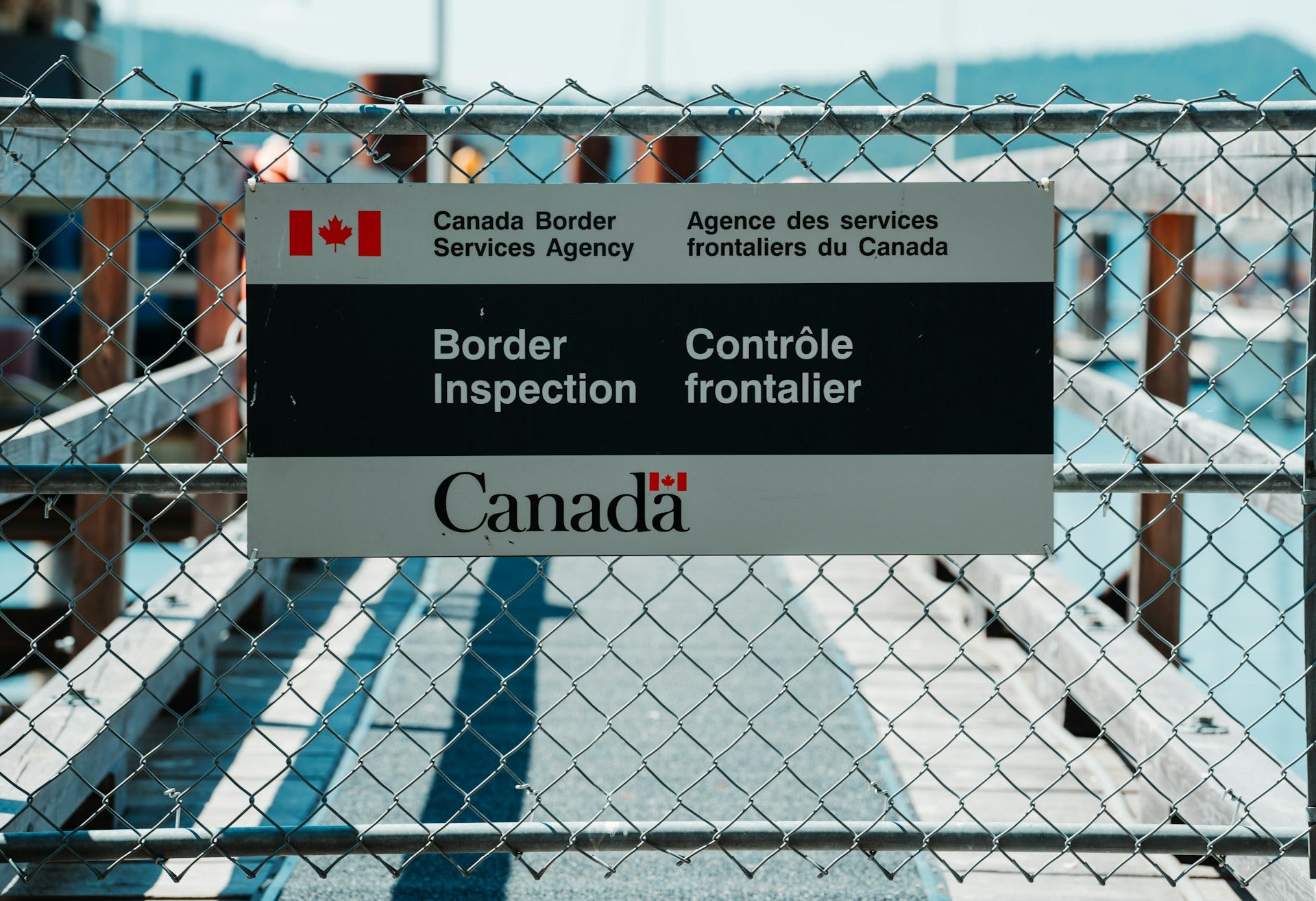
On Nov. 8, Viellard was driving between home-care visits in Highgate when he accidentally crossed into Canada, according to the account his lawyers gave the court. U.S. Border Patrol officers arrested him when he tried to return.
His lawyers challenged his detention in federal court in Burlington. Crawford wrote that both sides agreed Viellard was entitled to a bond hearing. The immigration court in Chelmsford, Massachusetts, was to decide whether he could live at home while his immigration case proceeded. Crawford kept in place the order barring federal authorities from moving him out of Vermont.
Who was supposed to get him there?
In a Nov. 24 email to Compass, Tracy Velázquez, the Vermont Department of Corrections’ executive director of policy and strategic initiatives, said the department lacks the space, staff and equipment to provide routine video hearings for immigration court. She said the state had long advised federal officials of that limitation. Ordinarily, she said, U.S. Immigration and Customs Enforcement emails the prison when agents plan to pick someone up. ICE handles the transport.
In September, the Vermont Human Rights Commission announced an agreement with Corrections to improve detainees’ access to attorneys and immigration hearings. Klostermann told Compass that under the agreement, her organization’s attorneys can bring their own laptops into a Vermont prison in an emergency. Velázquez confirmed the arrangement in a second email. “We’ve done this a couple of times,” she wrote.
Klostermann said state corrections staff helped the attorneys try to find out what had gone wrong on Friday. She described what happened as “exclusively a failure of ICE.” Compass asked ICE what arrangements it had made for Viellard to attend and whether it notified the prison or his lawyers. The agency had not responded by publication time.
Did his absence cost him the weekend in jail?
Viellard’s lawyers went into Friday’s hearing expecting to bring him home. They believed he posed neither a danger nor a flight risk and expected the judge to decide the matter that day even in his absence, Klostermann told Compass. The judge did not rule and gave no reason, she said.
If the judge had granted bond Friday, as his lawyers expected, Viellard might have spent the weekend at home. Instead he stayed in the Swanton prison until Crawford’s Monday hearing, the backup date Crawford had set in case the immigration court did not act.
Whether his absence from the hearing played any part in that is unclear. His lawyers doubt it, Klostermann said.
On Monday, Nov. 23, Viellard was absent again, this time from Crawford’s federal courtroom in Burlington. Paul Heintz of The Boston Globe reported that Assistant U.S. Attorney Matthew Greer attributed Monday’s missed appearance to a hearing notice that went to a reassigned ICE officer. The government also cited a misdemeanor reckless-driving charge in Arizona as grounds for holding Viellard, Heintz reported. Crawford’s Nov. 17 order described the charge as unresolved.
Crawford ordered Viellard released immediately. Heintz reported that Viellard, still at the prison, addressed supporters outside the Burlington courthouse over his attorney’s speakerphone. WCAX’s Lizzie Jensen confirmed his release that afternoon.
What happens next
Viellard’s asylum claim remains pending. According to the Globe’s account of Monday’s ruling, Crawford also barred ICE from detaining him again while his immigration case proceeds. Viellard can now await that decision from his home in Franklin County.