


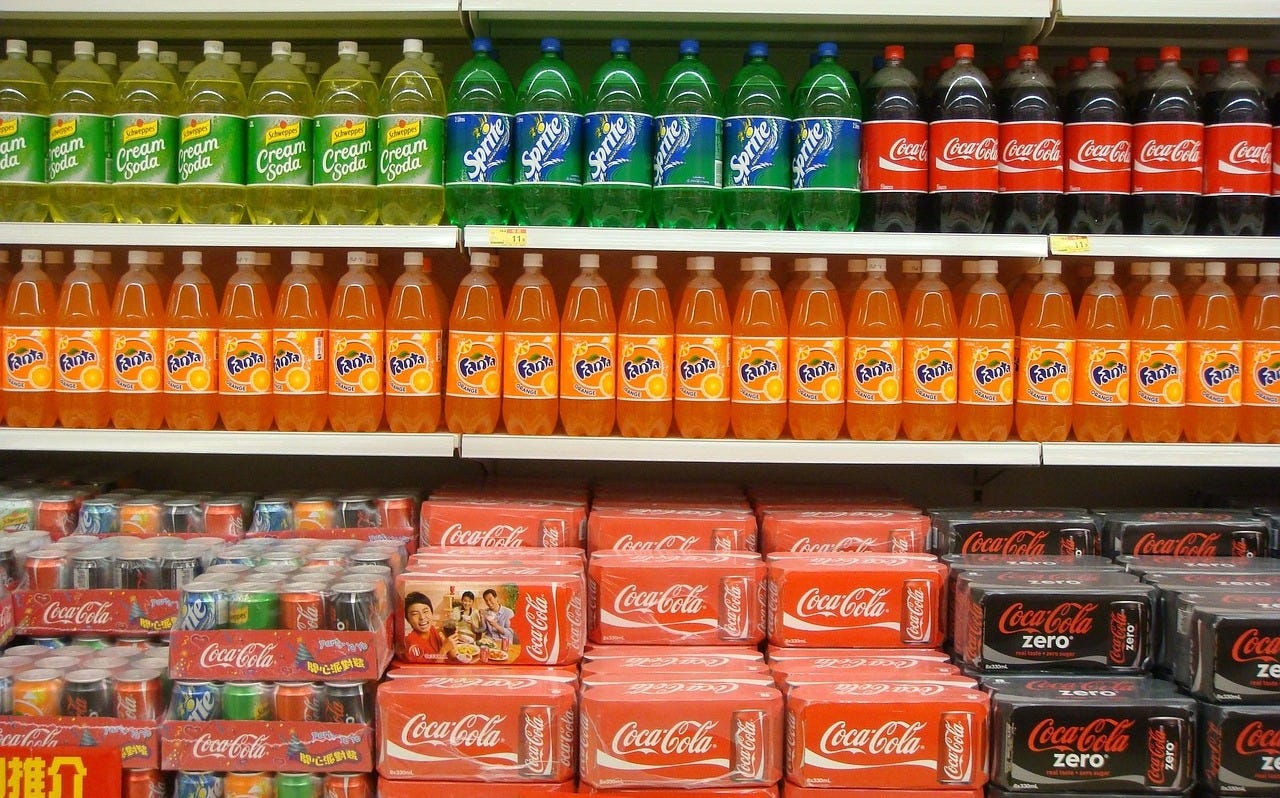
In January 2026, the landscape of food assistance in America underwent its most dramatic shift in nearly fifty years. Under the new Make America Healthy Again (MAHA) initiative, the federal government approved waivers allowing 18 states to restrict the purchase of soda and candy using Supplemental Nutrition Assistance Program (SNAP) benefits.
For many Vermonters reading national headlines, this has sparked confusion: Is my card going to work for these items? Is Vermont joining this movement?
The short answer is no. While a large portion of the country is moving toward restricting choices, Vermont has chosen a distinct path. This article explains the new national rules, the chaos facing retailers, and the specific reasons why Vermont officials have opted out of the “soda ban” experiment.
The “Make America Healthy Again” Shift
To understand the current situation, it is necessary to look at the philosophy driving the changes in Washington. Historically, the USDA’s primary goal with SNAP (formerly food stamps) was to alleviate hunger. The program generally avoided dictating what specific foods beneficiaries could buy, citing high administrative costs and the desire to avoid stigmatizing recipients.
However, the current administration, led by HHS Secretary Robert F. Kennedy Jr. and USDA Secretary Brooke Rollins, has pivoted the program’s focus from “anti-hunger” to “anti-chronic disease.” Their central argument is the “double-payment” theory: the idea that taxpayers should not fund unhealthy food purchases and then pay a second time, through Medicaid and Medicare, to treat the resulting diseases like diabetes.
In late 2025, the USDA utilized “demonstration project” authority to approve waivers for 18 states. These waivers effectively treat these states as a massive clinical trial to test if restricting purchases improves public health.
The Retail Reality: A Logistical Challenge
While the policy is driven by health goals, the implementation has created significant hurdles for grocery stores. The new rules affect over 21,000 specific items, and the definitions of what is “banned” vary wildly from state to state.
For example, in Colorado, the ban applies to beverages with any sweetener, natural or artificial. This creates a scenario where a full-sugar Coca-Cola and a zero-calorie Diet Coke are both banned. Meanwhile, in other states, diet sodas remain legal.
There is also the “juice loophole.” In states like Arkansas, beverages must contain at least 50% fruit juice to be eligible. This forces cashiers and Point of Sale (POS) systems to distinguish between 100% orange juice (allowed) and a cranberry cocktail that might be only 27% juice (banned).
Grocers, represented by groups like FMI—The Food Industry Association, have expressed concern over “friction at checkout.” They worry that cashiers will be placed in the difficult position of policing nutrition, potentially leading to long lines and customer confusion. Recognizing these technical challenges, federal administrator Patrick Penn granted a 90-day grace period for retailers to update their systems before facing penalties.
The Vermont Divergence
Vermont is not among the 18 states implementing these restrictions. The state’s absence from this list is not an oversight; it is the result of a fundamentally different approach to food security and a complex political relationship with the current federal administration.
1. The “Incentive” Model vs. The “Stick” While the MAHA states are using restrictions (the “stick”), Vermont has heavily invested in incentives (the “carrot”). The state champions programs like Crop Cash, administered by the Northeast Organic Farming Association of Vermont (NOFA-VT). This program matches SNAP benefits spent at farmers markets, effectively doubling a recipient’s purchasing power for fresh, local food.
In 2025, the state piloted “Crop Cash PLUS,” expanding these incentives to include local meats, eggs, and bread. Data suggests this approach works: in the summer of 2025, coupon redemption at markets tripled. Vermont’s philosophy is that making healthy food affordable is more effective—and supports local farmers better—than banning specific items.
2. The Border Bleed Factor Vermont’s geography makes a ban economically risky. The state shares a long, porous border with New Hampshire, a state with no sales tax and no SNAP soda ban. If Vermont were to restrict purchases, residents in border towns like White River Junction or Brattleboro could simply cross the river to shop in New Hampshire. This would result in a direct loss of revenue for Vermont’s independent grocers and local economy.
3. Friction with Federal Data Demands There is also a political backdrop. In 2025, the Scott Administration faced backlash after complying with federal demands to share sensitive data on SNAP recipients. After expending significant political capital on that issue, there is little appetite in Montpelier to voluntarily opt into another controversial federal pilot program that is unpopular with local anti-hunger advocates.
Fact-Checking the Narrative
If you are following the news on this topic, it is important to distinguish between the headlines and the fine print.
“Junk Food” is not banned: Many headlines claim “Junk Food Banned.” This is imprecise. In the waiver states, items like potato chips, cookies, and frozen pizzas remain perfectly legal to buy with SNAP benefits. The restrictions are narrowly targeted at beverages and candy.
The “Substitution Effect”: Critics note that banning soda does not guarantee better nutrition. Economists point to the “substitution effect,” suggesting that if a shopper cannot buy a soda, they may replace it with another high-sugar item that is still allowed, such as chocolate milk or a heavy fruit juice blend.
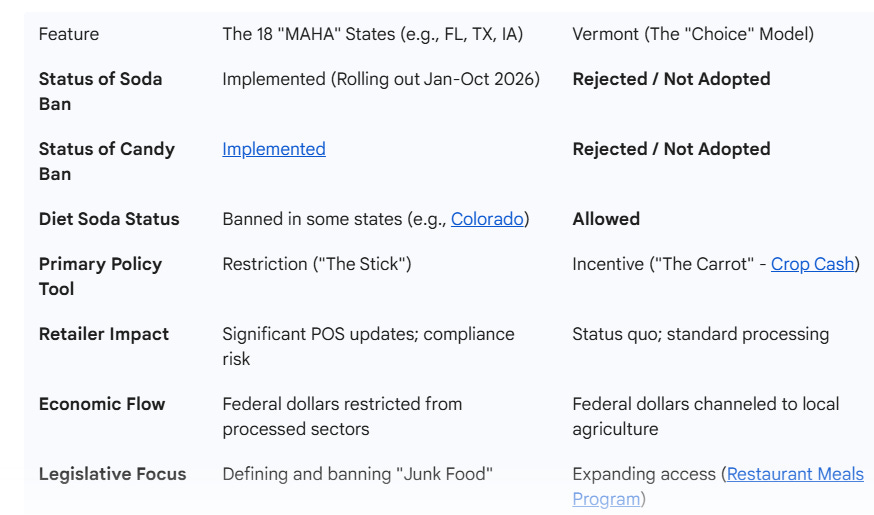
Summary: MAHA States vs. Vermont
The following table outlines the key differences between the states adopting the federal waivers and Vermont’s current position.
What Happens Next?
For now, Vermont serves as a “control group” in this national experiment. As 18 states begin enforcing these bans throughout 2026, researchers will be watching closely to see if health outcomes actually improve or if the policy simply increases administrative costs and stigma.
Meanwhile, Vermont legislators are moving in the opposite direction. Rather than restricting access, the House Human Services Committee has been debating the Restaurant Meals Program, which would allow elderly and disabled SNAP recipients to use benefits for hot, prepared meals—something the new federal waivers actively restrict in states like Iowa.
For Vermont residents, your 3SquaresVT benefits remain unchanged. You can continue to shop as you always have, with the state betting that supporting local agriculture and incentivizing fresh food is the healthier way forward.